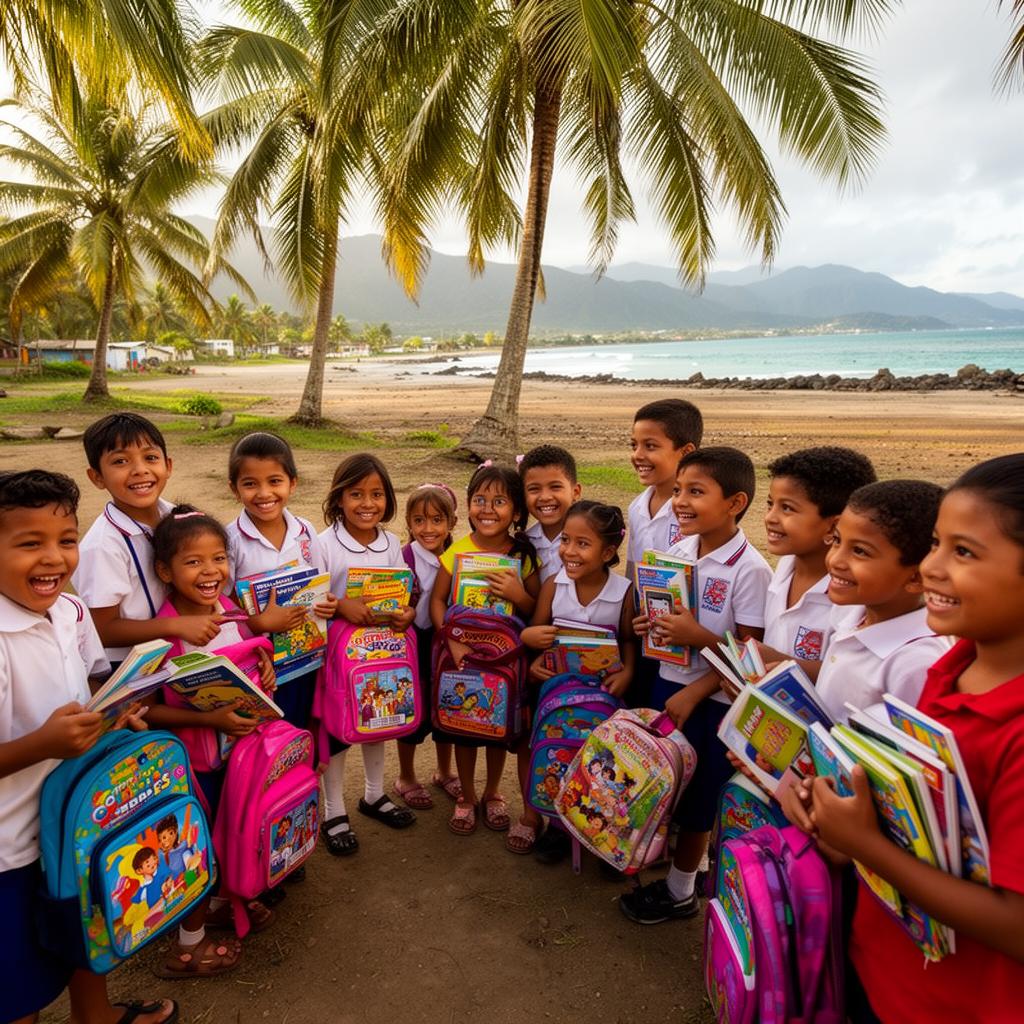
How we choose the books and supplies in every Phoenix Kit.
Inside the regional curation process: how local librarians, parents, and teachers help us pick every title and supply list.

We get asked a version of this question all the time: who decides what books and supplies end up in the kits? The honest answer is that we don't — not really. We host the process, but the decisions are made locally, by people who actually know the children the materials are going to.
Every Phoenix Kit starts with a curation meeting in the region where it will be delivered. We invite the school's teachers, at least one parent, the local coordinator, and a regional education specialist. We bring a long list of candidate titles and supply options — usually around 300 books and 50 supply configurations — and we go through it together.
Some of our criteria are non-negotiable. At least 30% of the books in any kit must be in the dominant local language, including indigenous languages where applicable. At least 20% must feature protagonists from the same region or cultural background as the children receiving the books. No kit ships without a meaningful selection of nonfiction — atlases, illustrated science books, biographies of local figures. And every supply pack must include the basics: a notebook, two pencils, an eraser, and a set of colored pencils.
Beyond that, the local team drives it. In a school in the Philippines, the teachers asked for more graphic novels because their older students had stopped reading prose. In Bolivia, the parents wanted picture books they could read aloud to children who weren't yet in school. In Colombia, the request was specifically for books with female scientists on the cover — and for watercolor sets, because the art teacher had been buying supplies out of her own salary.
It takes longer than just buying a pre-built kit off a wholesaler's catalog. It costs slightly more. But the books actually get read, the supplies actually get used, and they keep getting used after the novelty wears off. That is the entire point.